

The safest glass for your vehicle
Vern's Collision Blog
Back to all postsThe safest glass for your vehicle
Insurance companies have some interesting tactics when it comes to saving money. In the case of original manufacturer parts, they’ve come up with their own terms and names to make it look like you’re getting the best, when that is seldom the case. Keep reading for some information on what these insurance companies are saying.
OEE
The new term OEE is meant to befuddle consumers by making it similar to the initialism OEM. However, OEM stands for Original Equipment Manufacturer, whereas OEE stands for Original Equipment Equivalent. As we know, so-called “equivalent” parts are not up to the standards of the original manufacturer and thus should not be used in your vehicle.
Dealer Glass
Insurance companies like to use the term ‘dealer glass’ to make it seem like you’re getting OEM parts, because people assume the dealer gets their glass straight from the car manufacturer. This is seldom the case, especially with dealers who are listed with that insurance company as “trusted providers” or “preferred shops.” Unless they specifically say they’ll be using OEM parts, these dealers are still using aftermarket parts.
Aftermarket Glass
The term we’re used to hearing, aftermarket glass is the thinner, cheaper alternative to OEM glass. They do not have contractual access to the safety standards or manufacturing specifications for your vehicle’s glass, so they make something that they deem to be equivalent. However, consider this – a lawyer for the Florida suit against dozens of insurance companies stated the following:
“In a rollover crash, the windshield works to keep the vehicle roof from collapsing. Aftermarket glass is thinner than OEM glass, and is not designed to fit a particular vehicle. As with other aftermarket parts, replacement glass is not subject to crash testing requirements, thinner glass may shatter rather than providing protection in a rollover or may simply pop out altogether.”
The lesson here is this: only accept OEM glass. So-called “equivalent” parts are not the same.
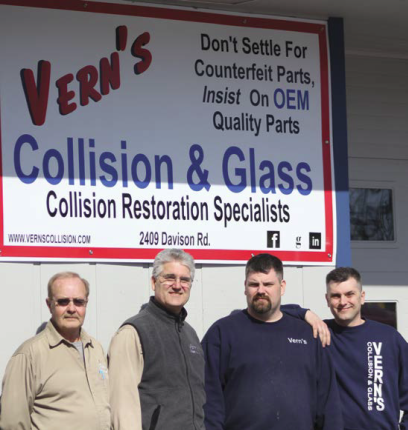
 Vern’s Collision and Glass was recently featured in the GM Repair Insights magazine about our commitment to keeping our customers safe in their vehicles.

 This post originally appeared on the
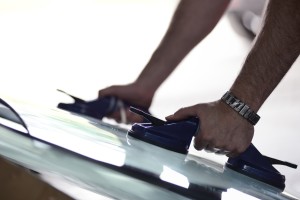 Your vehicle’s windshield can make up anywhere from 45% to 60% of your vehicle’s cabin strength in an accident. In fact, this was a hot topic at 2014’s Independence Day Conference and Spring Auto Glass Show, in Las Vegas. Ralph Nader gave a compelling presentation regarding the difference that high quality auto glass can make. The right auto glass provides protection for up to 3 consecutive rollovers in a vehicle, as the windshield glass should be able to sustain 1.5 times the vehicle’s weight. Cheap or poorly made auto glass will become crushed in 1 rollover, and usually the roof crushes in with the vehicle. You may be thinking, “That would never happen to me!” And you could be right. Vehicle rollovers account for only 3% of accidents… Yet rollover accidents still account for more than 30% of all vehicle related fatalities! Simply put, your auto glass is not something you should take (or replace) lightly. At Vern’s Collision and Glass, we promote saving money, but not at the risk of your own safety. This is why we advocate OEM glass; and all OEM repair parts for your vehicle.